

How Does Hotel Linen RFID Tracking Work?
Hotels Are Losing 20% of Their Linen Inventory (and Think It’s Normal)
Hotel operators spend most of their time managing labor, occupancy, and guest experience. Linen tends to sit in the background, even though it represents one of the largest operating expenses after staffing.
Mark Nordick, Laundris’s CEO, says the scale of loss is widely underestimated: “The industry standard is 20 to 30%… acceptable.”
In practice, that means a significant portion of inventory disappears over time without clear accountability. The loss is often absorbed as part of doing business rather than investigated as a solvable problem.
One in five assets. Gone. And the books just absorb it.
Let that sink in.
How Laundris Actually Works
The Limits of Manual Linen Tracking
Many hotels believe they already have control over their linen inventory. That assumption usually comes from some combination of manual counts, spreadsheets, and periodic checks.
Nordick describes what happens when those systems are examined more closely: “It’s impossible to keep track of 50,000 items manually. It just doesn’t work.”
Even when teams are diligent, the process depends on snapshots rather than continuous tracking. Items move between rooms, storage areas, and off-site laundry facilities, and small discrepancies accumulate over time.
The result is a record that looks complete but rarely reflects the actual inventory state.
Linen Loss Without a Clear Cause
Responsibility is often unclear when inventory goes missing. Hotels and laundry providers may each assume the loss happened on the other side of the exchange.
Nordick points to a case where the issue had little to do with theft or damage. “We had a hotel that lost $47,000 worth of napkins,” he says.
The problem stemmed from a workflow gap. Restaurant staff sent linens into the wrong processing stream, and without any tracking in place, the items left circulation entirely.
Situations like this tend to go unnoticed because there is no system capturing where items move or where they exit the process.
The Operational Burden of Counting
Inventory management also incurs labor costs that are easy to overlook.
In many properties, counting linen is still a manual task that takes hours to complete.
Nordick describes how that changes when tracking becomes automated: “Something that used to take eight to ten hours… is now done in five minutes.”
The difference is not only in speed but also in frequency. Instead of periodic counts, teams can check inventory daily without diverting staff from other responsibilities.
This shift affects how housekeeping teams operate. Time spent locating and redistributing linen is reduced, and room turnover becomes more predictable.
Linen Visibility as a Management Tool
The underlying issue across these examples is limited visibility. Without a clear view of inventory in motion, decisions rely on estimates.
Nordick says, “They lack visibility into the actual inventory itself.”
That gap affects purchasing, staffing, and daily operations. Hotels may overstock to compensate for uncertainty, or delay reorders until shortages become visible at the room level.
When inventory is tracked continuously, those decisions become more precise. Hotels can adjust par levels based on actual usage patterns rather than assumptions.
Nordick notes that some properties discover they are carrying more inventory than necessary once they can see it clearly. “I used to think I needed 4-5 PAR … now I only need 3.”
Loss rates also shift when movement is tracked in real time. Nordick describes reductions from typical industry levels to single digits. “Get to a 3% loss. That’s extremely attainable.”
What is Laundris?
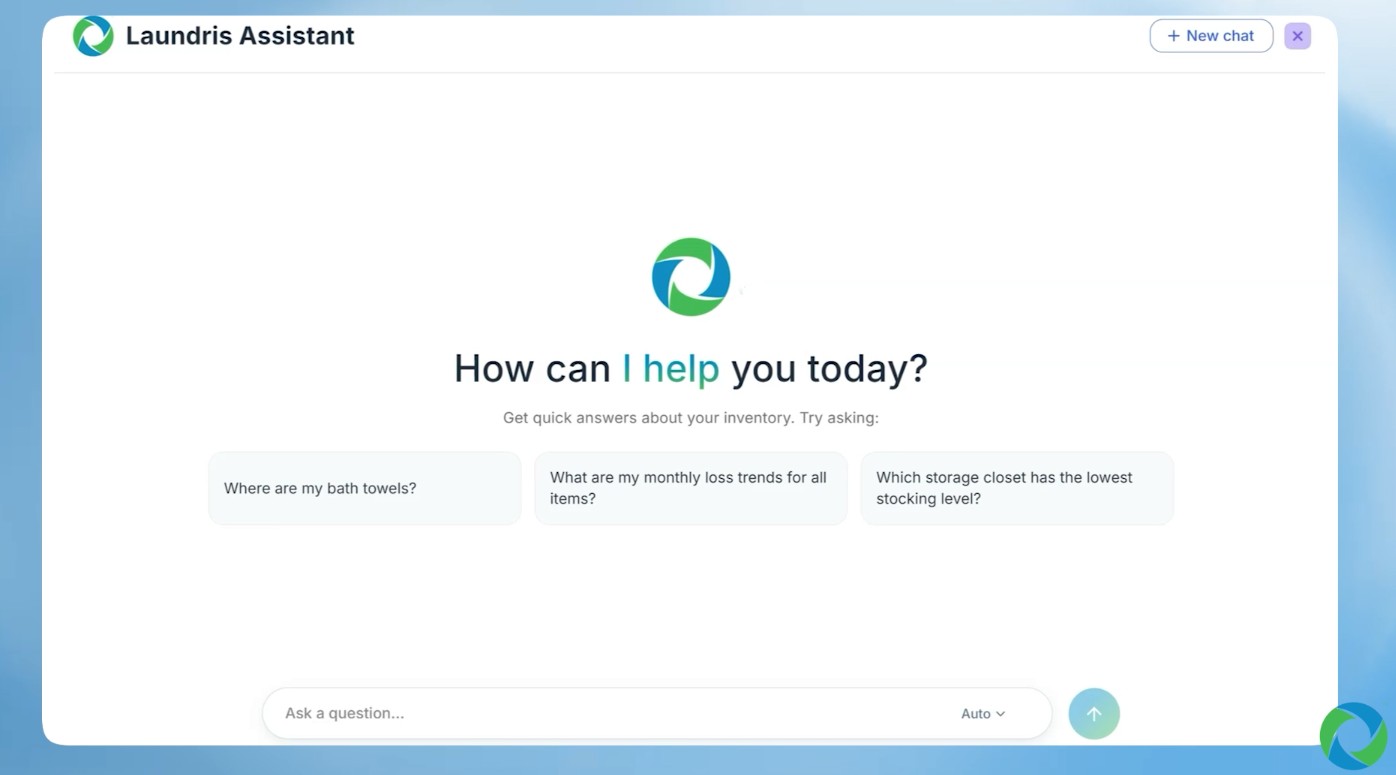
Laundris addresses the visibility gap rather than replacing existing laundry operations. Nordick describes it as “a software platform that leverages RFID… and artificial intelligence to provide recommendations based off that visibility.”
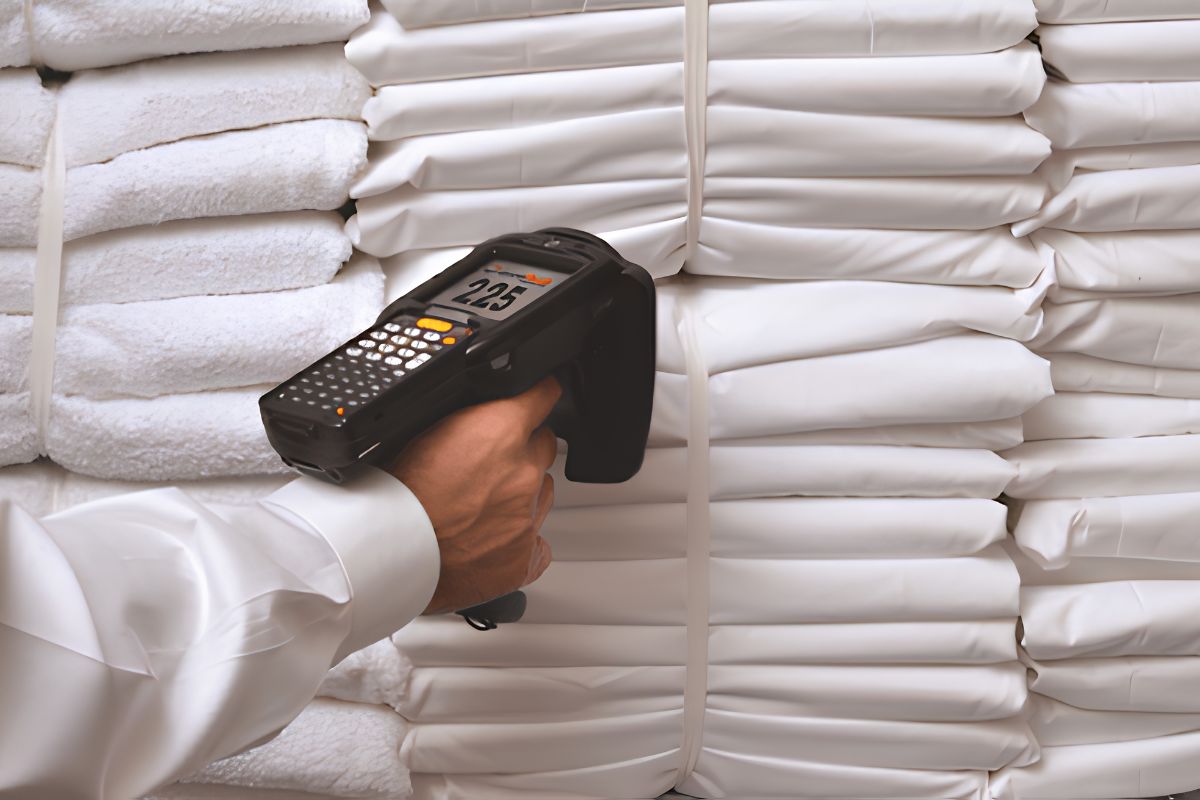
The system begins by embedding RFID chips into linens, either during manufacturing or by retrofitting existing inventory.
Readers placed throughout a property and in laundry facilities automatically capture movement. That data feeds into a platform that shows where items are at any given time and how inventory levels are changing.
From there, the software extends into forecasting and replenishment.
By combining historical usage, current inventory, and booking data, it can estimate future demand and trigger orders when needed. Nordick emphasizes that the company does not supply linens or operate laundry services.
“We’re a pure software player,” he says
Hotels can continue working with their existing vendors while using the platform to manage inventory more precisely.
Rethinking What Counts as Normal
Linen loss has long been treated as an unavoidable part of hotel operations. The combination of manual processes and limited tracking made it difficult to measure accurately, which in turn made it difficult to challenge.
As tracking technology becomes more accessible, that assumption is starting to change. With clearer data, inventory management shifts from approximation to measurement. What was once considered typical begins to look more like a correctable inefficiency.
For operators, the shift is less about adding a new process and more about replacing a blind spot with something observable.
See What Your Linen Operation Actually Looks Like
If you don’t have real-time visibility into your inventory, you’re likely making decisions on incomplete data. Laundris helps hotels track every item, reduce loss, and plan inventory with precision.
Learn how Laundris works. Book a Demo >>

Laundris Appoints Mark Nordick as CEO to Lead Next Phase of Growth
.avif)
Hotel Budget Season Is Here: How to Streamline Costs this Season
.avif)
Laundris Corporation Announces Strategic Partnership with Garnier Thiebaut to Complete Full Textile “Connected” Supply Chain Offering
See the real cost of inventory inefficiency—and fix it.
Have questions or would like to learn how Laundris can help Modern your linen inventory management?
Reach out to us here.

Contact us
To schedule a demo, please complete this form and a member of our sales team will be in touch.
