

The $1.5 Million Towel: What GMs Gain from Real-Time Linen Accountability

Linen used to live in the basement … literally and strategically.
Housekeeping counted it. Laundry processed it. The GM only heard about it when something went sideways.
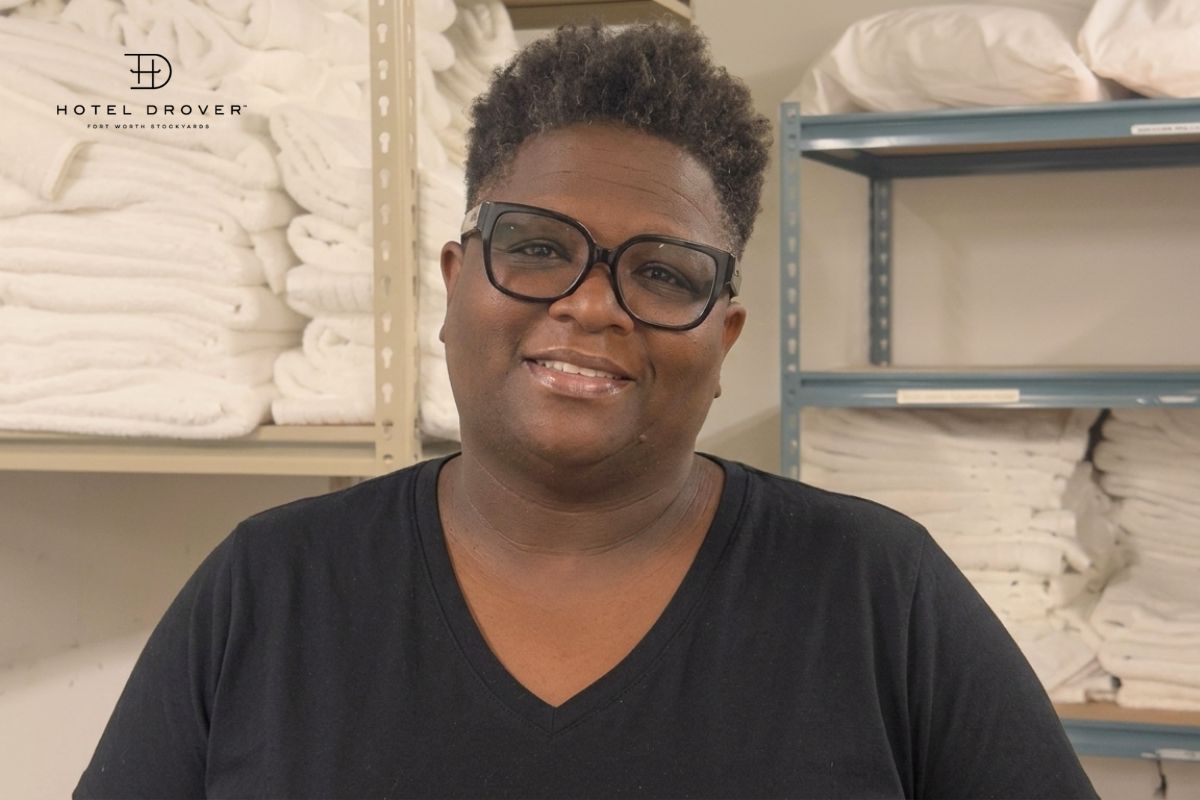
Barbara Dela Cruz, hospitality executive and technology leader, says that’s exactly the problem.
“It bounces back and forth between housekeeping and the general manager,” she explains. “But typically it gets to the general manager when it’s a problem.”
And that problem usually sounds like this: “We did a hand count and we have way less than we thought we did… and now we have to go back to our ownership and ask for another $10,000 or $20,000.”
Worse? “We can’t describe where it went.”
When a GM has to explain a capital request without understanding the loss, that’s not an operations hiccup. That’s a leadership liability.
Let’s talk about why linen visibility has officially graduated to the C-suite.
Why Linen Visibility Is Now a GM Power Move
When Guesswork Costs Six Figures
For decades, hotels have operated on a blend of habit and hope. Three PAR became gospel. Overstock to avoid embarrassment. Understock if cash is tight. React when the crisis hits.
Barbara calls it what it is: “The strategy right now is to guess and to hope and to overstock. Or roll the dice and understock.”
Neither option is strategic.
Overbuying means “hundreds of thousands of dollars worth of inventory sit on shelves for literal months and years.” Underbuying means high-occupancy panic, overtime, 24-hour laundry rush fees, and what she perfectly labels “search and scramble.”
Here’s the kicker: both approaches are expensive. One bleeds cash quietly. The other bleeds loudly.
Without real counts and real-time tracking, hotels default to fear-based purchasing. That’s not asset management. That’s damage control.
Data changes the posture entirely. “By understanding real numbers and real counts and real data, we now have the opportunity to be strategic for the first time ever.”
That’s not incremental improvement. That’s operational evolution.
Three PAR Is Not a Religion
The industry standard says three PAR. Barbara says context matters.
“Not all hotels are made equal, yet we set equal PAR levels at all hotels.”
A downtown entertainment district hotel has different consumption patterns than a corporate weekday property. A beach resort churns through towels like a smoothie bar churns through ice. A suburban select-service property? Different story.
And yet many ownership groups apply identical PAR logic across portfolios.
With structured visibility, GMs can tailor inventory to actual consumption patterns. Barbara explains, “By really understanding what you need through data, you can be strategic in order properly versus guessing.”
That shift impacts:
- Capital planning
- Cash flow smoothing
- Replacement cycles
- Vendor negotiations
It also changes how GMs communicate with ownership. Instead of “We ran out,” the conversation becomes, “Our loss rate is trending at X%, and we need Y replacement based on occupancy projections.”
That’s how you move from reactive operator to strategic leader.
The P&L, the Team, and the Guest Feel It
The financial impact is obvious: fewer emergency purchases, fewer rush fees, and less labor waste. But Barbara emphasizes something just as powerful—predictability.
“When you look back over your historical numbers, we had that huge purchase last spring because we ran out.”
Those surprise spikes distort the P&L. Structured visibility levels the curve. Smaller, consistent replacements replace big, emotional capital requests.
Operationally, the culture shifts, too.
“No more search and scramble. No more hours spent on the phone with the laundry company trying to figure out what happened. No more finger-pointing and blame because there’s full transparency now.”
When both hotel and laundry see the same dashboard, the mystery disappears. So does the distrust.
And then there’s the guest.
Barbara says she's seen mismatched towels “in upper midscale or even sometimes luxury” hotels. “A guest may not recognize that it’s all a little bit different but they can still tell.”
Guests might not articulate it, but they feel it. The room wasn’t quite ready. The towels didn’t match. Check-in took too long.
“That’s the death now,” she says. “It was fine. But it wasn’t great.”
In a competitive market, “fine” is dangerous.
If housekeepers aren’t “running around looking for washcloths,” they can focus on detail. If rooms aren’t dropped due to shortages, revenue flows. If the team has the tools it needs, the service-profit chain actually works the way textbooks promise.
Linen may be white, but its impact is anything but neutral.
A $1.5 Million Lesson in PAR Discipline
One hotel chain adopted structured linen visibility across 17 U.S. properties. Before that, they defaulted to five PAR to “make sure they didn’t run out.”
After implementation?
They dropped to an average of three-and-a-half PAR.
That single adjustment drove “one and a half million dollars in the first year of savings.”
Not from layoffs. Not from rate hikes. From inventory precision.
They even adjusted opening PARs, moving from over-five-PAR panic to seasonally optimized three-to-four-PAR discipline.
That’s what happens when fear gets replaced by data.
When Transparency Saves the Relationship
Another example hits at the heart of hotel–laundry tension.
A laundry lost a major client due to “lack of transparency and understanding of where’s my stuff?”
The hotel insisted the laundry had inventory. The laundry replied, in essence: "Why would we hoard your towels?" We don’t have a secret warehouse plotting world domination.
Trust eroded. The account walked.
Two years later, the hotel wanted to return. The laundry agreed, but only with shared visibility in place.
Within weeks, a familiar call came in: “You have all my shams.”
Instead of days of phone calls and finger-pointing, they checked the dashboard. It showed the last known location. The owner physically walked to that area.
The cart was there.
Misplaced. Human error. Recovered within hours.
Ownership was clear. Accountability was clear. Relationship restored.
Data didn’t just find the linen. It rebuilt trust.
The Executive Takeaway
Linen visibility isn’t about towels. It’s about control.
It’s about replacing guesswork with forecasting, emergency spending with structured cash flow, and blame with shared accountability.
Most of all, it’s about protecting the guest experience before it unravels.
When GMs know “what you need, when you need it, where you need it,” as Barbara puts it, linen stops being a liability and becomes an asset.
The basement conversation has moved upstairs.
Smart operators are bringing it to the boardroom.
Ready to Stop the Linen Search-and-Scramble?
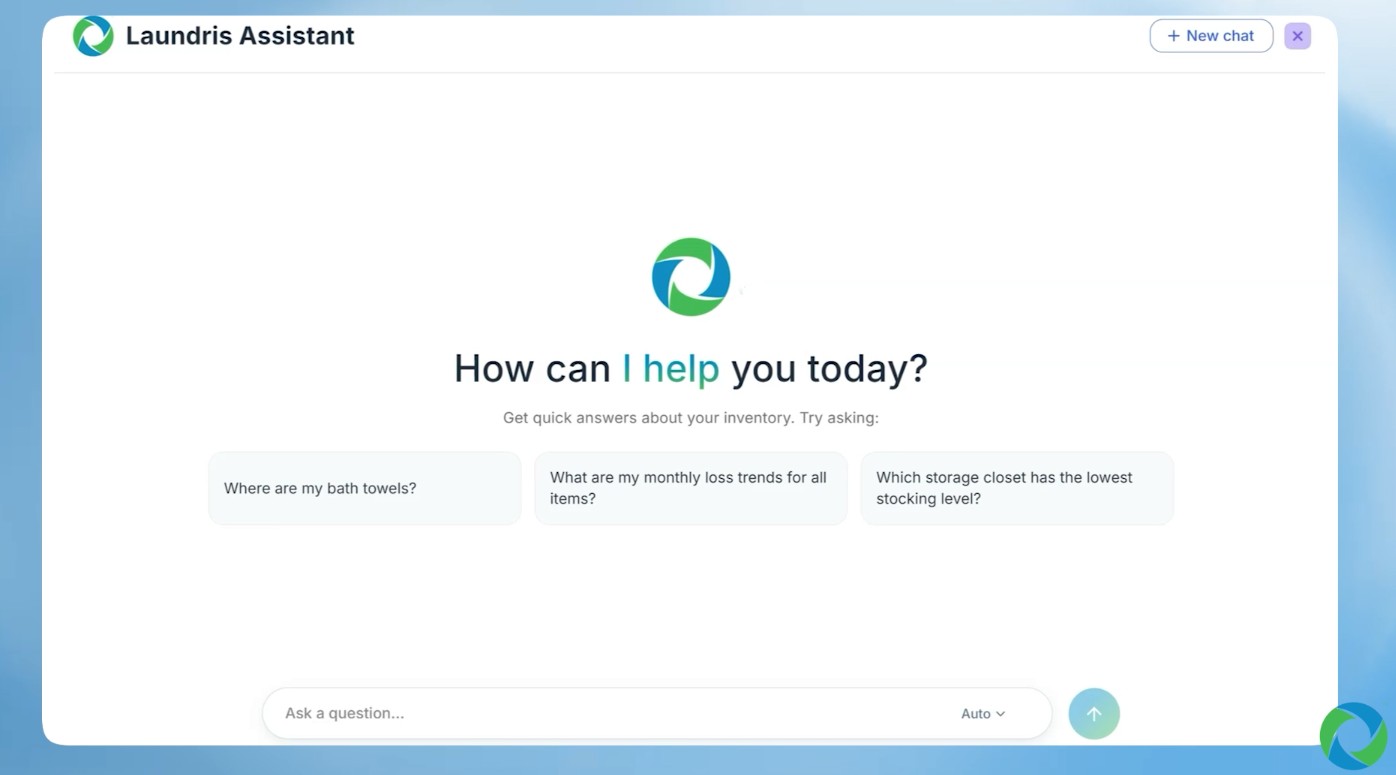
If you’re tired of guessing your PAR, writing surprise capital requests, or playing detective over missing shams, it’s time for real visibility.
Laundris gives you the data to protect your P&L, empower your team, and deliver a guest experience that feels polished (not pieced together.)
See what you actually have. Know where it actually is. Order with confidence.
Curious how we can help your linen visibility? Book a demo and turn your linen program into a strategic advantage.
The Laundris Experience, According to the People Who Use It Every Day
Your PAR Levels May Be Too High! Find Out Why.
The $1.5 Million Towel: What GMs Gain from Real-Time Linen Accountability
See the real cost of inventory inefficiency—and fix it.
Have questions or would like to learn how Laundris can help Modern your linen inventory management?
Reach out to us here.

Contact us
To schedule a demo, please complete this form and a member of our sales team will be in touch.
