

Why Hotels Are Rethinking Linen Management

Hotel leaders rarely begin the day wondering how many sheets, towels, or pillowcases are circulating throughout the property.
They are thinking about room readiness, staffing levels, guest requests, maintenance issues, arrivals, departures, and the dozens of other challenges competing for their attention.
Linen only becomes a priority when something goes wrong.
A floor runs short of towels. Housekeeping cannot turn rooms quickly enough. A shipment arrives late. Linen replacement costs climb without a clear explanation. Managers scramble to solve the immediate problem, only to encounter another shortage a few days later.
According to Don Ward, founder and CEO of Laundris, these recurring problems point to a larger issue: hotels may not have a linen problem as much as they have an operational visibility problem.
Moving Beyond Daily Firefighting
Hotels are complex operations, and leaders often spend much of their time responding to whatever needs immediate attention.
“There is a fire here, a fire there, and another fire somewhere else,” Ward said. “The ultimate goal, with all of these fires, is figuring out how to maintain a high level of guest experience and customer service.”
That focus on the guest is exactly where hotel leaders’ attention should be. But it also means leaders may overlook behind-the-scenes processes until those processes begin affecting service.
Linen management is a prime example.
Many hotels know approximately how much linen they own, but they may lack a clear picture of where it is and guests use it, how long it remains off-property, or when the hotel should replace it.
Without that information, managers are forced to make decisions based on estimates, periodic counts, and visible shortages. By the time the problem surfaces, it may already be disrupting housekeeping operations or room availability.
Better operational visibility changes that equation. It allows hotel teams to identify patterns earlier and address potential issues before they become emergencies.
Connecting the Front and Back of the House
Hotel technology has traditionally concentrated on guest-facing and administrative functions, while back-of-house operations have received far less attention.
Property management systems, customer relationship management platforms, revenue management systems, and enterprise resource planning tools have given leaders greater visibility into reservations, pricing, guest preferences, and financial performance.
The back of the house has often remained less connected.
That is beginning to change as technologies such as RFID, artificial intelligence, camera systems, and spatial intelligence create new opportunities to understand how physical assets move through a hotel.
Hotels gain the greatest value not by deploying each technology separately but by connecting them.
“It’s not a segmented approach,” Ward said. “These technologies can play together and open up operational visibility across the entire four walls of the property.”
For linen management, that might mean connecting inventory movement with occupancy forecasts, housekeeping schedules, laundry turnaround times, staffing requirements, and purchasing decisions.
Instead of simply knowing that 500 towels left the property for laundering, a hotel could better understand whether that amount is consistent with occupancy, when the towels should return, and whether the property has enough clean inventory to meet upcoming demand.
Across a hotel portfolio, leaders could also compare performance between properties, identify unusual losses, and make more informed purchasing and staffing decisions.
RFID Is an Enabler, Not the Entire Solution
RFID frequently sits at the center of conversations about modern linen management, but Ward cautions hotel executives against viewing it as a complete solution by itself.
“RFID is just one piece of a big puzzle,” he said.
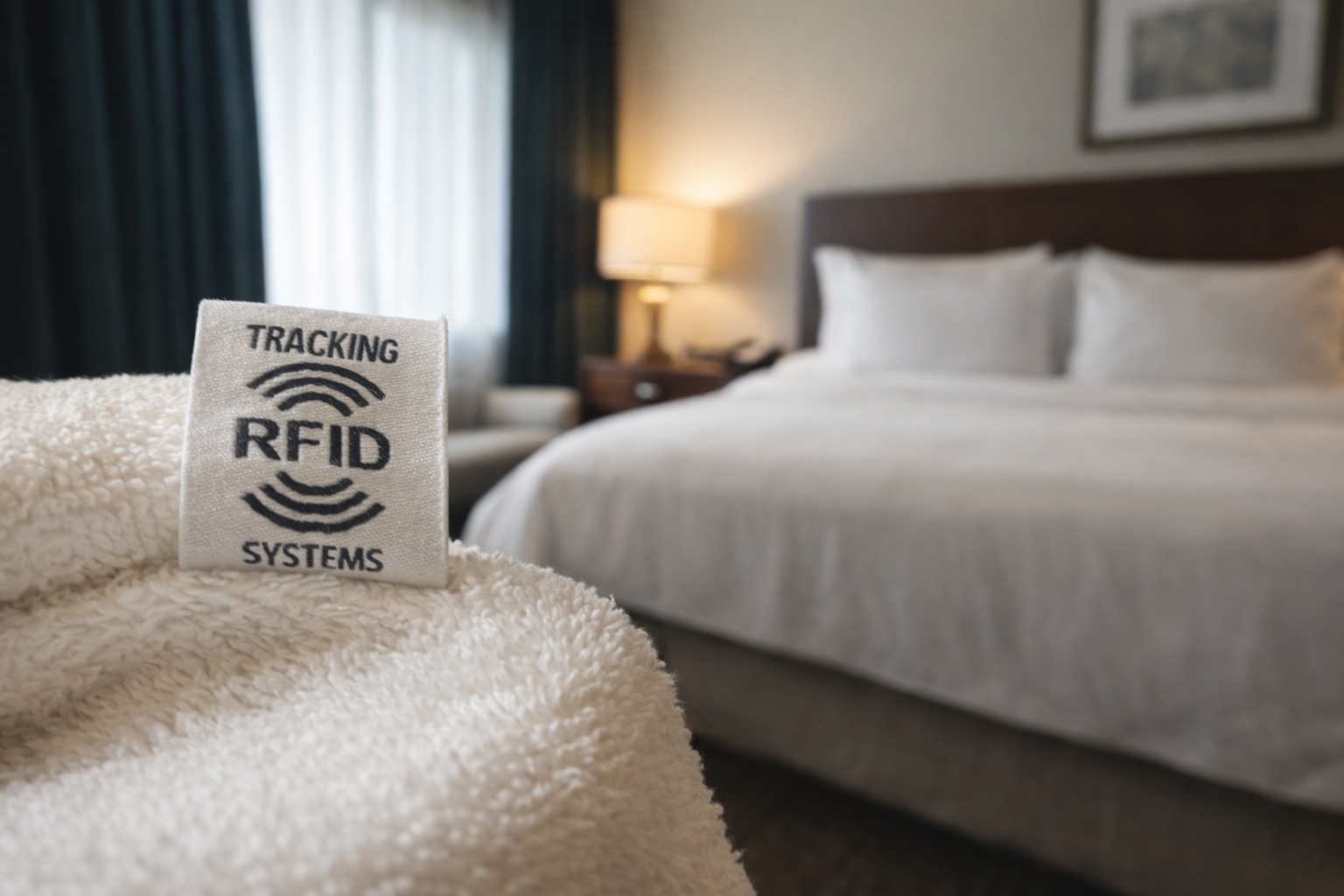
RFID tags can help hotels identify and track individual linen items or groups of items as they move between guest rooms, storage areas, laundry facilities, and outside service providers.
Tracking movement, however, is only the starting point.
The more important questions are what the system learns from the data and how that information improves hotel operations.
A comprehensive linen management solution should help hotel leaders:
- Understand circulation patterns. Hotels should be able to see how linen moves through the property and where delays, losses, or bottlenecks occur.
- Improve forecasting. Inventory requirements should reflect occupancy levels, expected demand, laundry turnaround times, and historical usage.
- Plan replacement purchases. Leaders need better insight into when to reorder linens instead of waiting for shortages or relying on arbitrary purchasing schedules.
- Support housekeeping operations. Linen availability should be connected to room turnover requirements and staffing needs.
- Evaluate portfolio performance. Multi-property operators should be able to compare usage, loss rates, processing times, and inventory levels across locations.
In other words, hotel executives should look beyond whether a system can count linen. They should ask whether it can turn those counts into decisions.
From Reactive to Proactive Operations
The greatest potential benefit of connected linen management is the ability to anticipate operational needs.
Traditional linen management is largely reactive. A hotel identifies a shortage and orders more inventory. A floor runs out of towels, and staff members search for additional stock. Replacement costs increase, and managers investigate after the fact.
When reliable data is combined with intelligent systems, hotels can begin moving toward a proactive model.
A system may recognize that linen circulation times are increasing, for example, or that a particular property is losing inventory faster than comparable hotels. It may forecast that an upcoming period of high occupancy will require additional par levels or earlier laundry processing.
That shift matters because seemingly small back-of-house disruptions can quickly reach the guest.
A delayed linen delivery can slow room turnover. Slower room turnover can affect check-in times. Late check-ins can lead to longer lines, frustrated guests, service recovery costs, and poor reviews.
Operational visibility helps hotel teams intervene earlier in that chain of events.
Evaluating Linen Management Solutions
Hotel executives should approach RFID and AI-enabled linen platforms with realistic expectations.
“Any RFID solution is only going to be as good as the data it is collecting,” Ward said. “It is only going to be as good as the workflows it knows.”
AI cannot compensate for incomplete data, poorly defined processes, or a lack of industry knowledge. A platform must first understand how linen actually moves through a hotel and commercial laundry environment.
When evaluating potential partners, hotel leaders should ask:
- Does the provider understand hospitality and commercial laundry workflows?
- Has the provider tested the solution in real operating environments?
- Can it account for linen moving both inside and outside the property?
- Does it provide actionable insights or merely inventory counts?
- Can it integrate with other hotel systems?
- Can it support multiple properties and portfolio-level reporting?
- How will the system learn and improve over time?
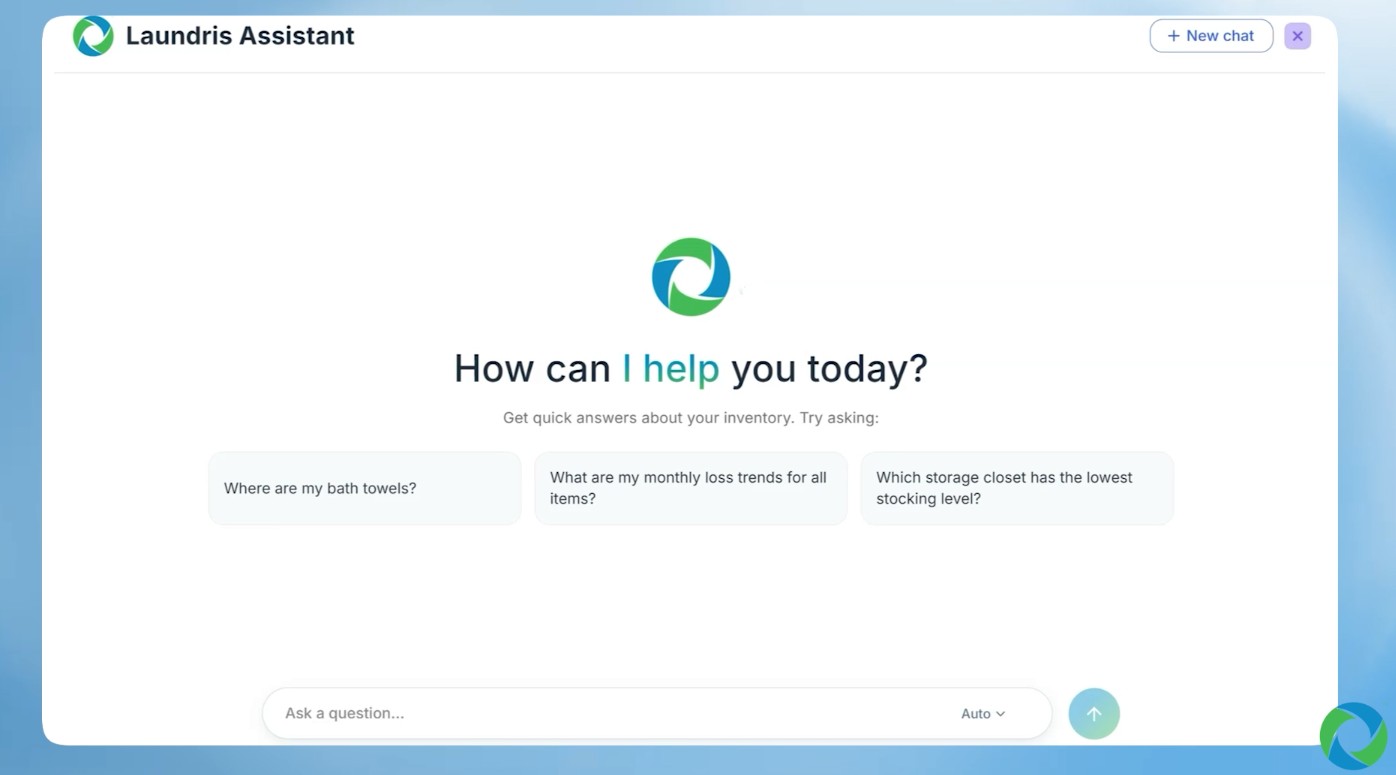
Laundris approaches this progression through what Ward describes as a five-step methodology: thing, connect, collect, learn, and do.
The process begins with the physical asset. Technology connects that asset to a digital system, collects data about its movement, learns from the resulting patterns, and ultimately helps the organization take action.
The specific technology may evolve, but that progression is central to transforming physical operations into useful intelligence.
A Smarter Hotel Starts Behind the Scenes
The hotel of the future will not simply be more automated. It will be more aware of what is happening throughout the property.
It will have a better understanding of its guests, staffing, inventory, physical spaces, and daily operating needs. Systems that previously worked independently will increasingly share information, allowing hotel teams to make faster and better-informed decisions.
Linen management may appear to be only one small part of that transformation. In reality, it offers hotel leaders a practical place to begin.
By gaining greater visibility into an essential physical asset, hotels can reduce firefighting, strengthen back-of-house operations, and protect the guest experience.
Because when the right linen is in the right place at the right time, guests may never notice. And that is exactly the point.
Have questions? Connect with us here >>

Revolutionizing Inventory Management: Groundbreaking Partnership Unveiled

AI is Transforming the Hospitality Industry
How RFID and AI Are Transforming Linen Inventory Management for Hotels
See the real cost of inventory inefficiency—and fix it.
Have questions or would like to learn how Laundris can help Modern your linen inventory management?
Reach out to us here.

Contact us
To schedule a demo, please complete this form and a member of our sales team will be in touch.
